
AI Engineering
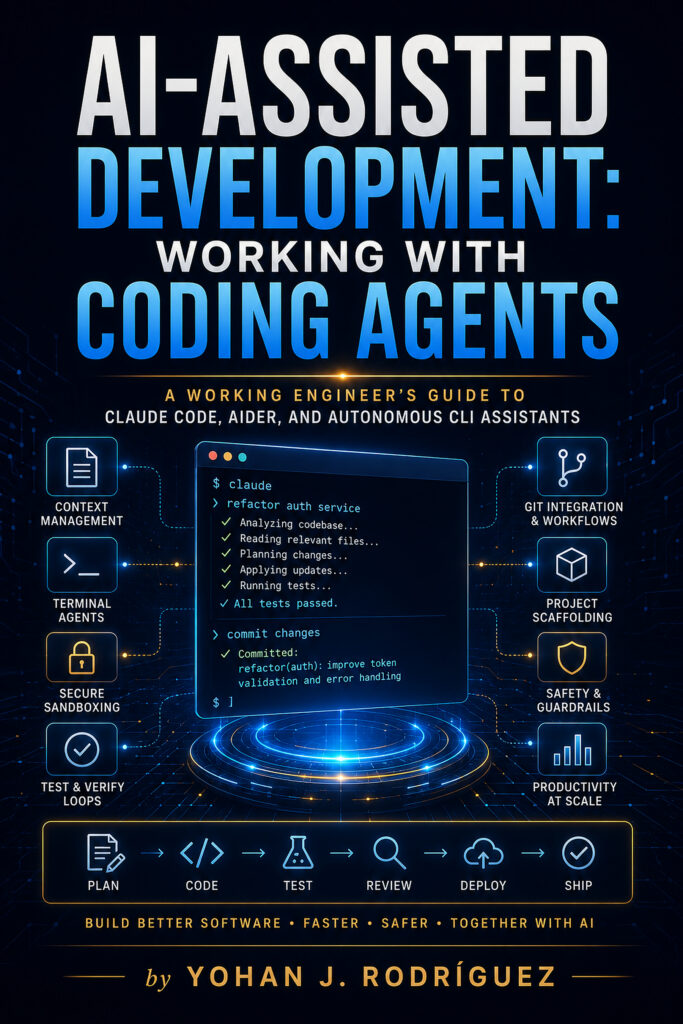
AI-Assisted Development
Working With Coding Agents
A working engineer's guide to building and maintaining production software with autonomous terminal coding agents.
About this book
Terminal coding agents can now read a codebase, plan a change, edit many files, run the tests, and hand you a diff. Used well, they compress hours of mechanical work into minutes; used carelessly, they produce confident, plausible, and wrong changes faster than any human could.
AI-Assisted Development is a practical guide to using them well, for working developers who want to move faster without giving up control of quality, security, or their git history. Its method is simple: the human designs, the agent executes, and a human-reviewed diff is the gate between the two.
Git, tests, context files, and a sandbox are the four backbones that make that safe. The book builds each one, then adds the judgment no tool supplies: what to delegate, what to keep, how to review what comes back, and when to stop a session.
Part I maps the tools and walks through a controlled first session. Part II covers daily practice, from sandboxing and prompting to refactoring, diff review, git micro-commits, and testing. Part III scales the practice to local and cloud models, custom tools, teams, and CI, and closes with the anti-patterns and maintenance habits that keep it healthy.
Because tool names and flags change quickly, the book anchors on durable patterns and treats specific commands as illustrations to adapt.
More books
-
AI Engineering
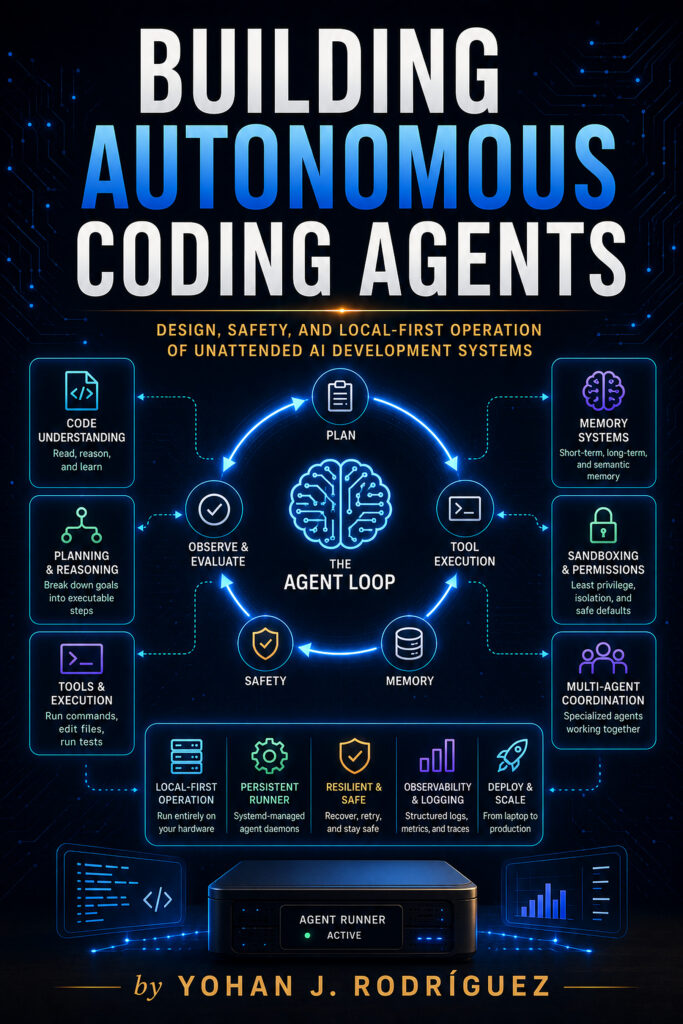
Building Autonomous Coding Agents
Design, Safety, and Local-First Operation of Unattended AI Development Systems
-
AI Engineering
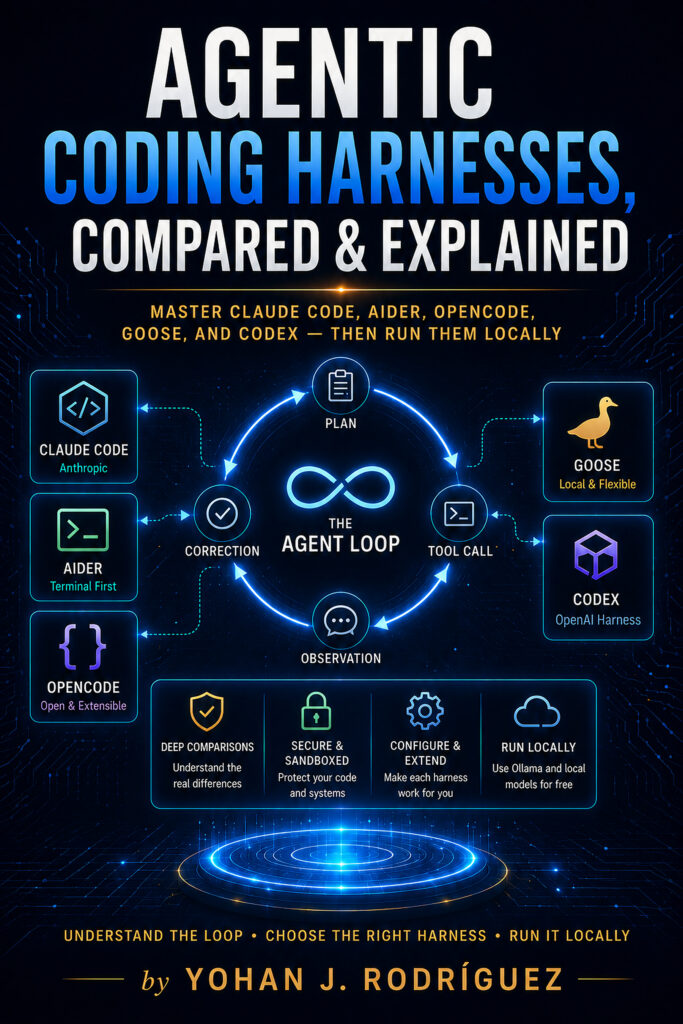
Agentic Coding Harnesses, Compared & Explained
Master Claude Code, Aider, OpenCode, Goose, and Codex — Then Run Them Locally
-
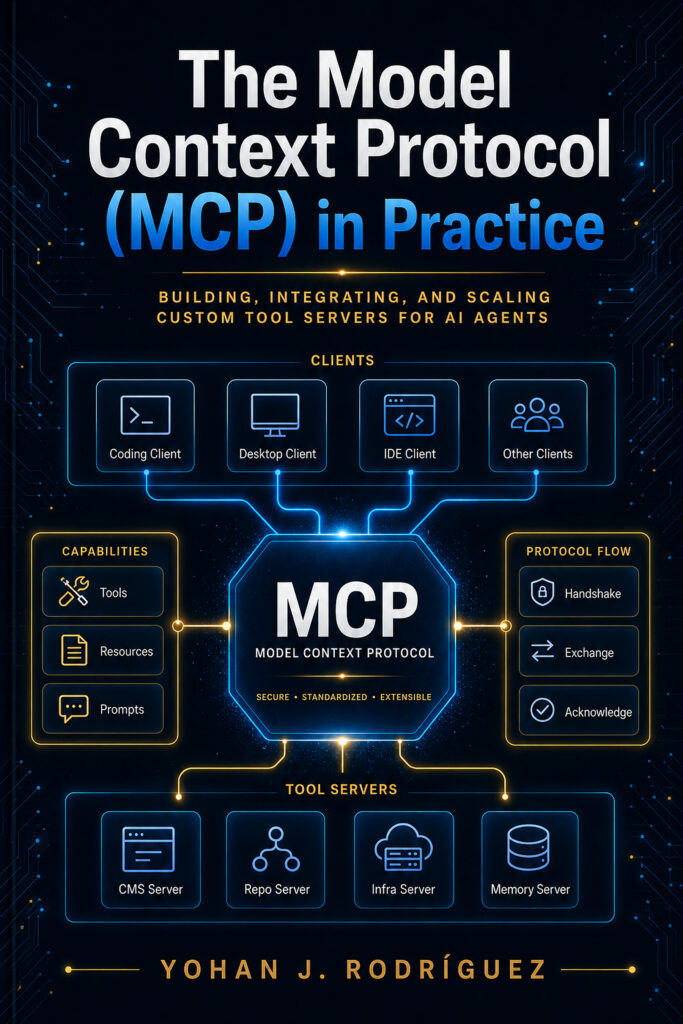
AI Engineering
The Model Context Protocol (MCP) in Practice
Building, Integrating, and Scaling Custom Tool Servers for AI Agents