

AI Engineering
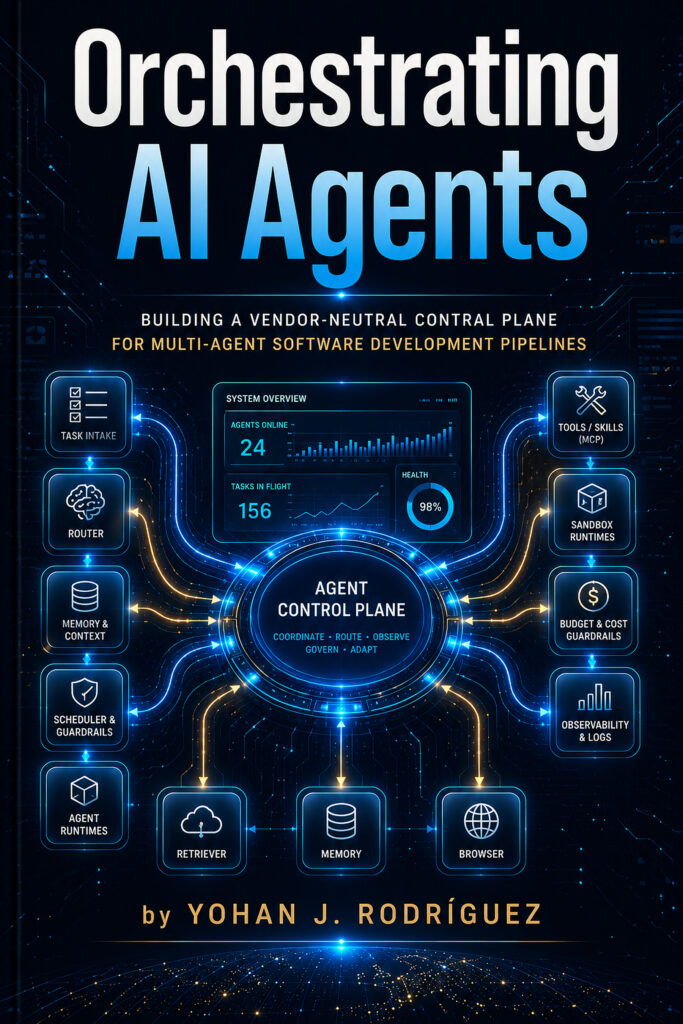
Orchestrating AI Agents
Coordinating Claude Code, Codex, Local Models, and MCP with a Persistent Control Plane
A practical guide to operating a fleet of AI coding agents through routing, memory, skills, MCP, guardrails, and a persistent control plane.
About this book
Orchestrating AI Agents is a practical, architecture-first guide to operating several AI coding agents as one coordinated system. It has sixteen chapters in four parts, is vendor-neutral by design, and uses a single worked control plane, Hermes, to show how the pieces fit while labeling what is specific to it. It is written for engineers, platform builders, and technical founders who already run more than one agent, and it is not a tutorial for any single tool.
The book starts from a problem and a thesis. Claude Code, Codex, local models, and MCP servers each do something well, but nothing owns persistence, scheduling, cross-project memory, routing, or a capability registry. Because an agent's commands run in a shell and most serious agents offer a headless mode, a persistent control plane can drive any command-line agent as a tool. The book's rule is to orchestrate rather than replace, so the control plane stays a modest coder and becomes an excellent operator.
The middle of the book builds the mechanics. A dated survey reads Claude Code, Codex, Antigravity, Aider, OpenCode, and local models on the axes that matter for routing. The delegation primitive covers briefs, adapters, validated output, write-back, and auth isolation. A routing engine decides by stakes, context size, privacy class, and autonomy among acting directly, delegating, and escalating, under one absolute rule that high stakes reaches a human. Layered memory is shared across harnesses, skills form a capability registry, MCP is the shared tool layer with reads freely granted and writes gated through one seam, and local-first routing is enforced by a model gateway.
The last part is about operating the result. It covers defense-in-depth sandboxing, approval modes and blocklists, scheduling with a lease-based multi-agent work queue, a worked orchestration with a software-release factory and a customer-support fleet as further cases, budgets and spend governance, and a catalogue of failure modes with a discipline of escalation and a clear account of what never to automate. It closes with a maturity arc and an honest ceiling: production, money, and security stay human-reviewed.
Readers come away able to route work by explicit criteria, brief and validate delegated runs, design shared memory that compounds, contain unattended agents, govern their spend, and recover when a standing fleet fails. Tool-specific claims are dated and treated as examples to confirm against current documentation, while the architecture is written to outlast them.
More books
-
AI Engineering
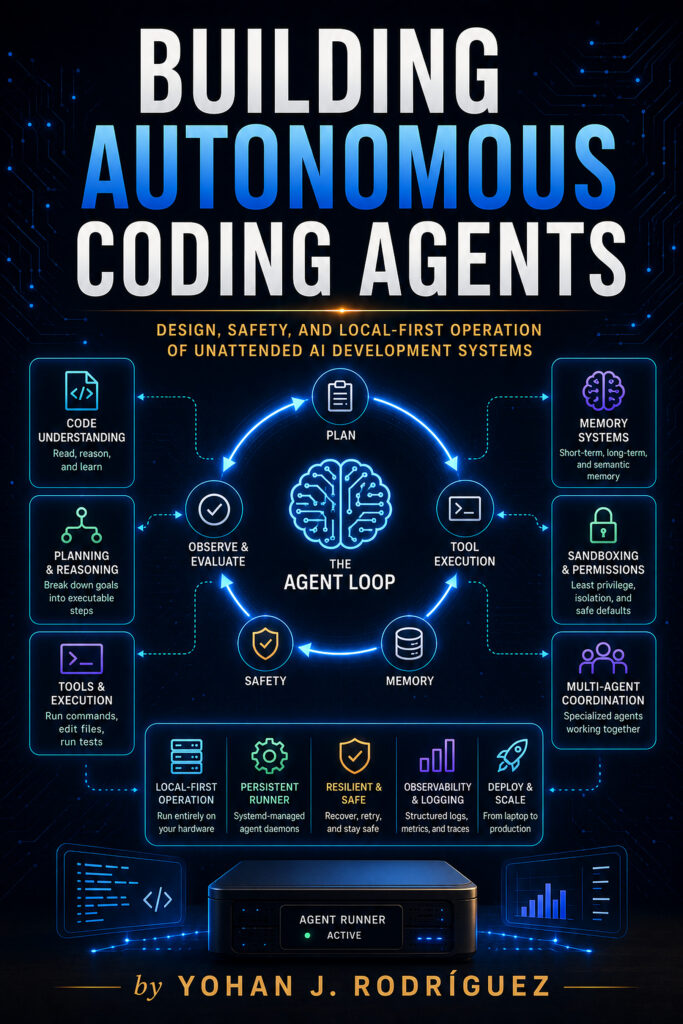
Building Autonomous Coding Agents
Design, Safety, and Local-First Operation of Unattended AI Development Systems
-
AI Engineering
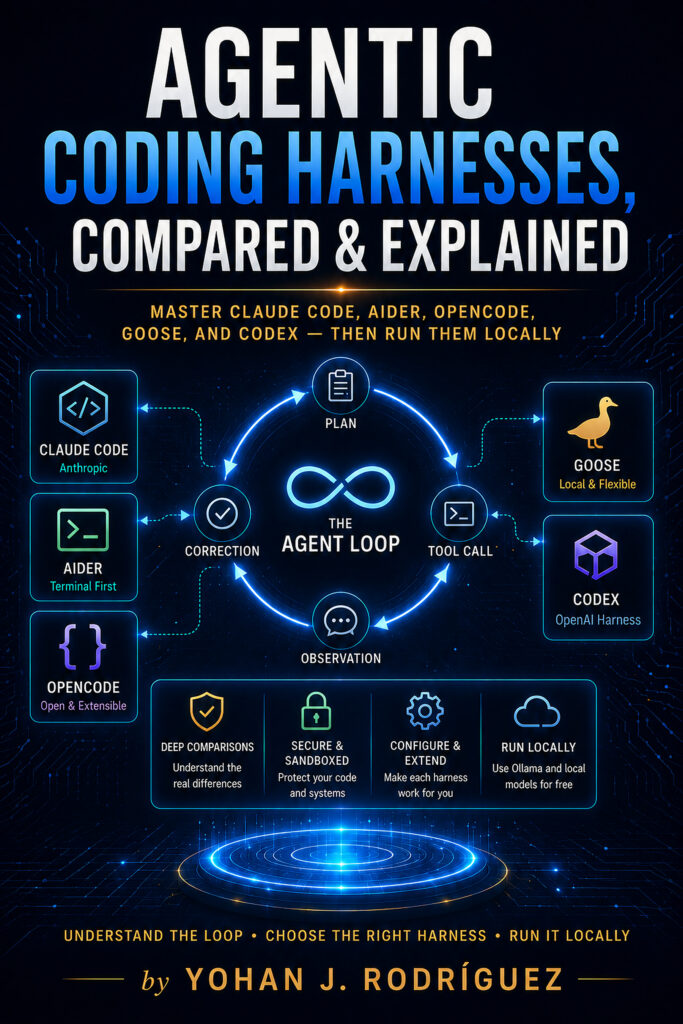
Agentic Coding Harnesses, Compared & Explained
Master Claude Code, Aider, OpenCode, Goose, and Codex — Then Run Them Locally
-
AI Engineering
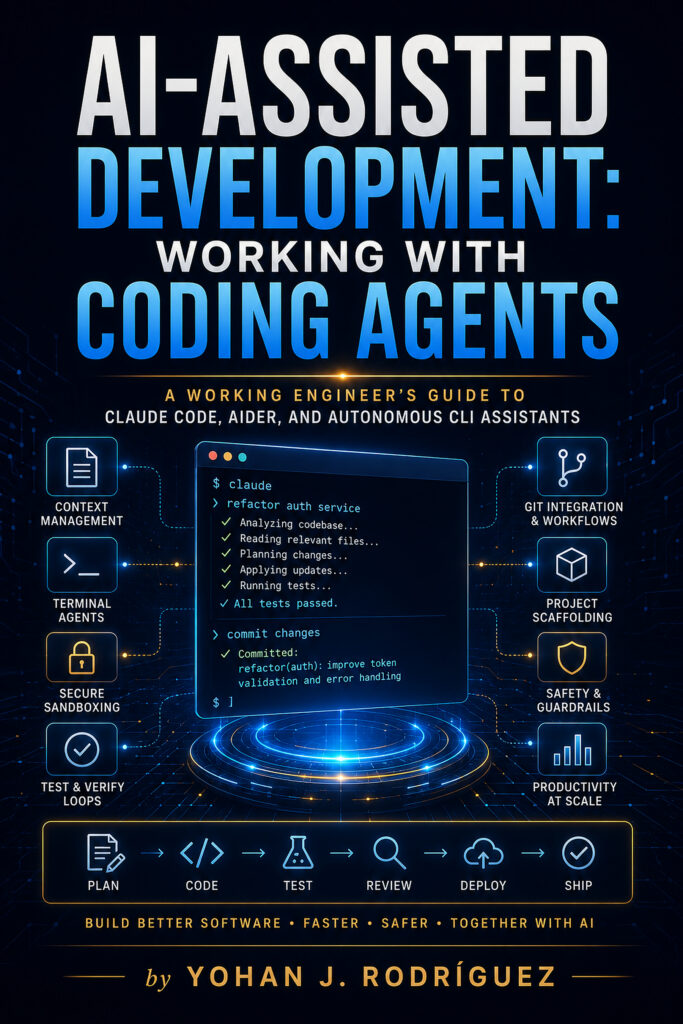
AI-Assisted Development
Working With Coding Agents