

Interview Compendiums
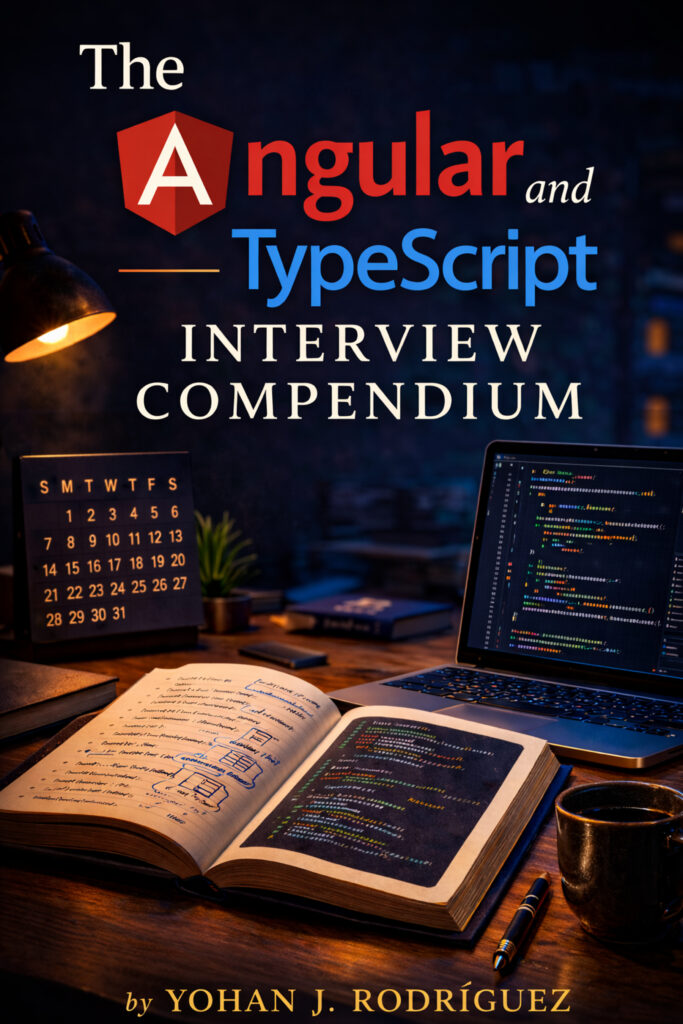
The Angular and TypeScript Interview Compendium
Interview Questions and Answers for Angular and TypeScript Developers
A structured front-end interview guide focused on Angular internals and TypeScript fundamentals.
About this book
The Angular and TypeScript Interview Compendium is a question-and-answer reference for developers preparing for Angular and TypeScript interviews, and for anyone who wants to explain the modern Angular stack rather than only use it. Instead of walking through a sample application, it is organized around the questions interviewers actually ask, and each answer goes past the definition to the mechanism behind it, the tradeoff it carries, and how a strong candidate would frame it out loud.
Angular and TypeScript are treated as one discipline rather than two topics bolted together. The book opens with Angular's evolution and three chapters on the TypeScript language — fundamentals and narrowing, generics and advanced types, and runtime boundaries, modules, and tsconfig policy — and returns to the connection later with a chapter on how typed contracts shape components, forms, HTTP services, routes, and dependency injection.
Across six parts, the Angular material moves from workspace structure, components, data binding, directives, and dependency injection, through RxJS, signals, state management, and forms, to HTTP, routing and guards, and authentication and frontend security. It then turns to what keeps an application healthy in production — change detection and performance, testing, debugging and diagnostics, server-side rendering and hydration — and closes with architecture decision-making, scalable structure for large teams, and TypeScript code-reading scenarios. The emphasis is on modern Angular, including standalone components, signals, built-in control flow, functional guards and interceptors, and typed forms, with older NgModule- and RxJS-era patterns explained where they still appear in real codebases.
The reading experience is practical rather than tutorial. Every chapter ends with key takeaways, most include a section on common anti-patterns, and many include interview scenarios that describe what a strong answer covers. More than three hundred code listings illustrate recommended patterns and, in many chapters, the mistakes they replace.
Readers come away able to explain why Angular changed and how to migrate an aging codebase in stages, say where TypeScript's guarantees end, choose among component state, signals, RxJS, service state, and NgRx and defend the choice, and discuss testing, performance, security, and architecture in terms of tradeoffs rather than slogans. It is written for mid-level to senior developers who already have hands-on Angular and TypeScript experience, not as a first tutorial, and it works both as a front-to-back preparation course and as a chapter-by-chapter reference before a specific interview or design review.
More books
-
Interview Compendiums
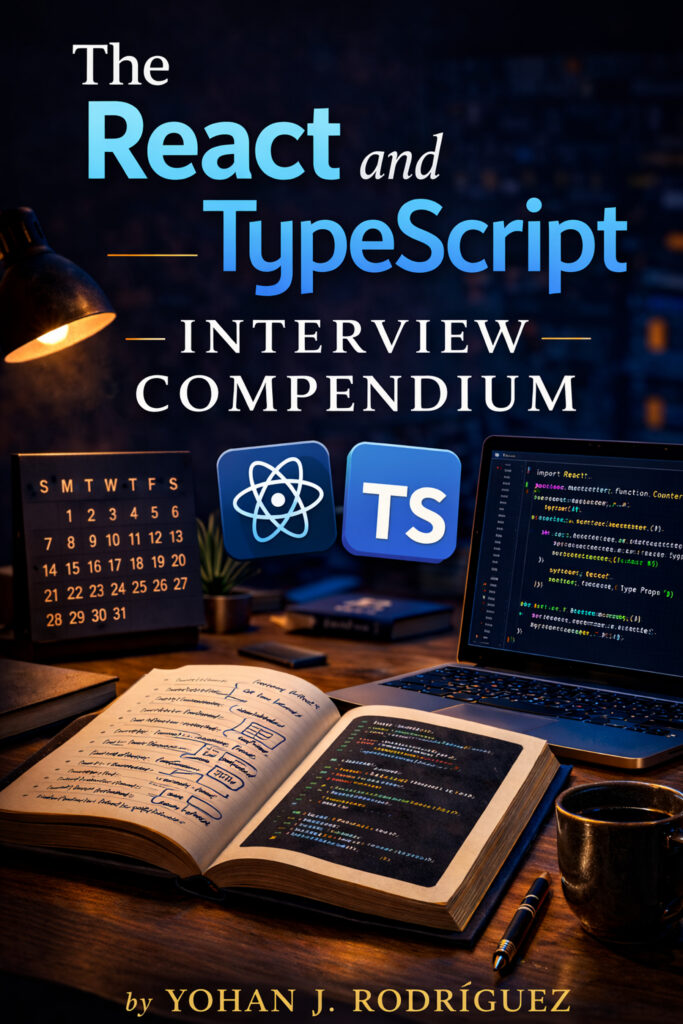
The React and TypeScript Interview Compendium
Interview Questions and Answers for React and TypeScript Developers
-
Interview Compendiums
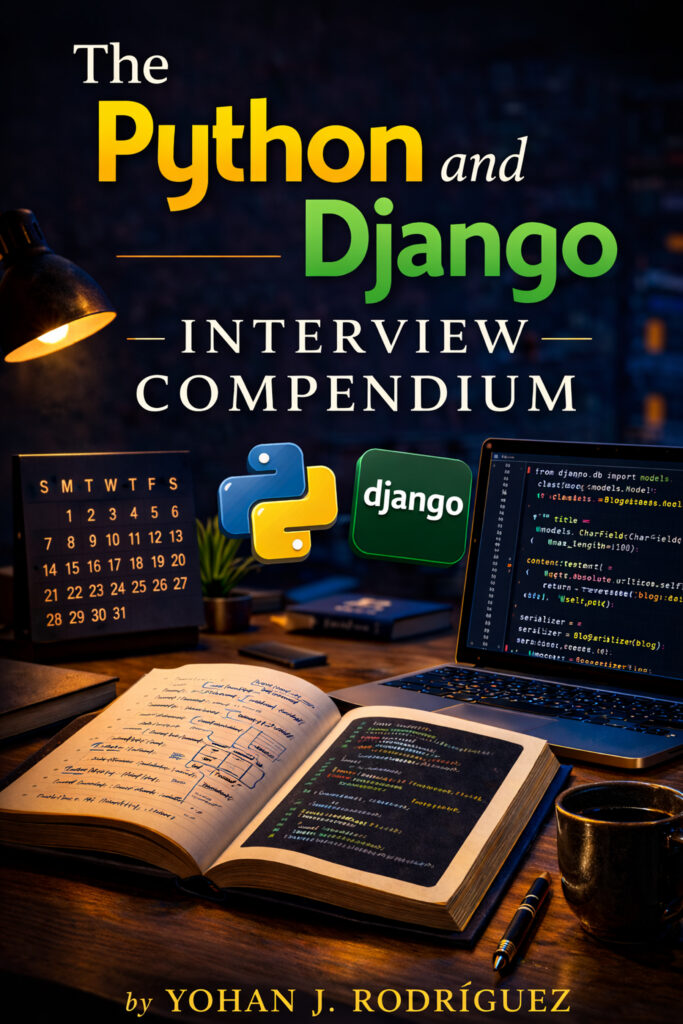
The Python and Django Interview Compendium
Interview Questions and Answers for Python and Django Developers
-
Interview Compendiums
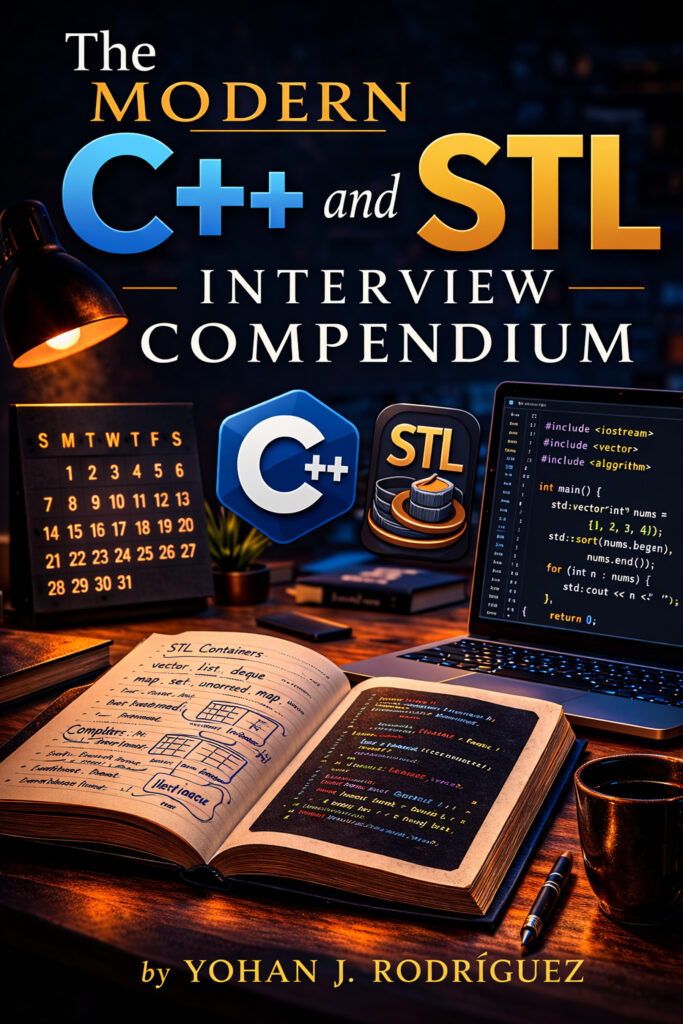
The Modern C++ and STL Interview Compendium
Interview Questions and Answers for Modern C++ Developers